

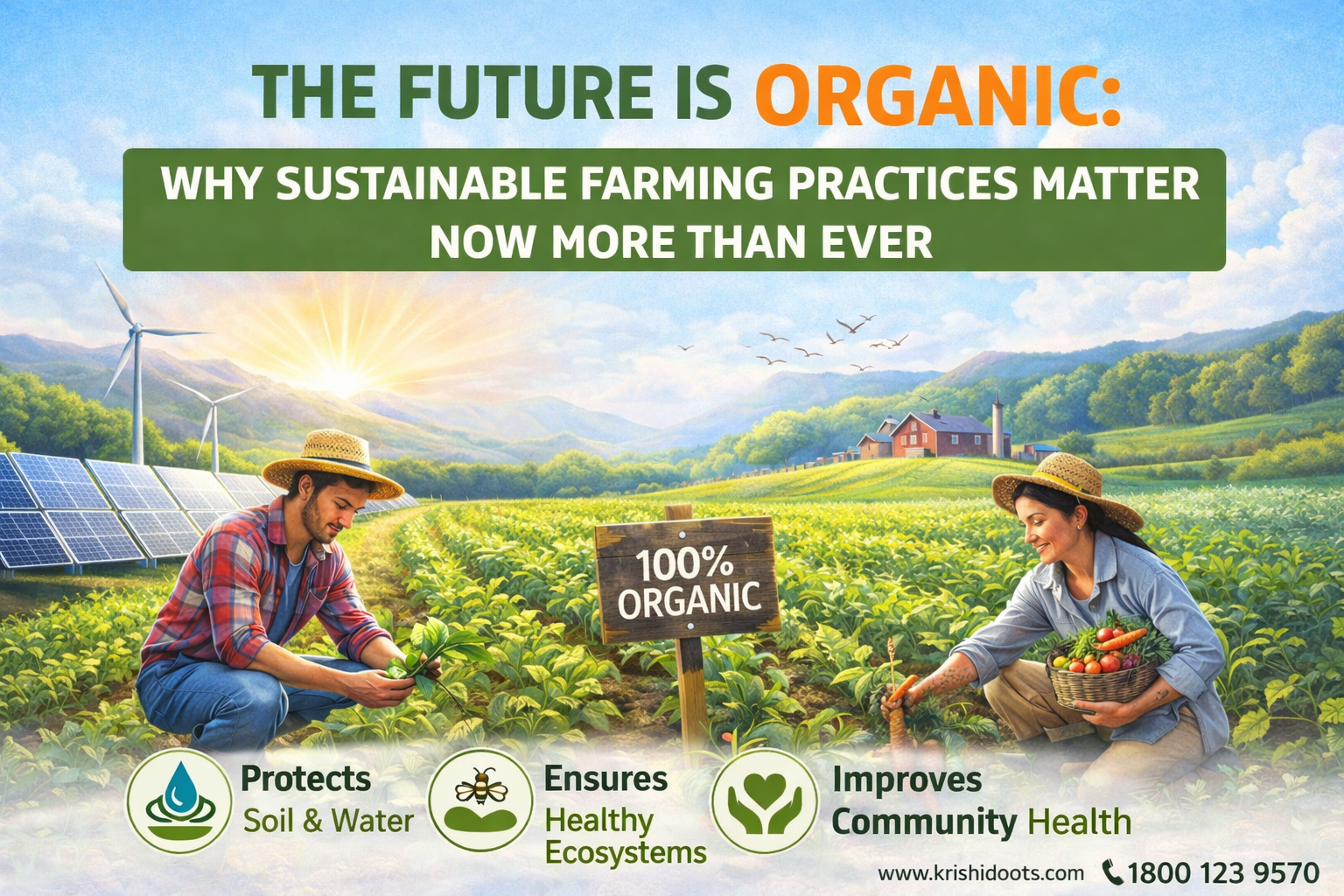
The Future is Organic: Why Sustainable Farming Practices Matter Now More Than Ever
22 Feb, 2026
In the modern agricultural landscape, the word "organic" is often tossed around as a lifestyle trend. However, at its core, organic farming is much more than a label—it is a vital return to a system that respects the Earth's natural cycles. As we face global challenges like soil degradation and water scarcity, transitioning to sustainable practices isn't just a choice; it matters now more than ever.
1. The Foundation: Transforming Soil Health
In conventional farming, soil is often treated as a mere "container" for crops, kept productive through a cocktail of synthetic fertilizers. Organic farming, however, treats soil as a living ecosystem.
- Microbial Biodiversity: Organic practices, such as composting and green manuring, feed the soil’s microlife. A single teaspoon of healthy organic soil can contain billions of beneficial bacteria and fungi.
- Carbon Sequestration: Organic soils act as "carbon sinks." By increasing soil organic matter, these farms pull CO₂ from the atmosphere and store it in the ground, helping to mitigate climate change.
- Structural Integrity: Organic matter acts like a sponge, improving soil structure and preventing erosion. This allows the land to withstand extreme weather, from droughts to heavy floods.
2. Guarding the Lifeline: Improving Water Quality
Agriculture is the largest consumer of freshwater worldwide, but it is also a major source of pollution. Organic farming offers a solution to the water crisis by:
- Eliminating Runoff: Without synthetic nitrogen and phosphorus fertilizers, there is no chemical runoff to cause "dead zones" in our rivers and oceans.
- Enhancing Retention: Because organic soil is rich in humus, it can hold up to 20-30% more water than conventional soil. This reduces the need for heavy irrigation and keeps the local water table recharged.
- Filtering Pollutants: Healthy, biologically active soil acts as a natural filter, cleaning the water as it percolates down into the aquifers.
3. Beyond the Plate: Human Health and Nutrition
What we put into the soil eventually finds its way into our bodies. The health benefits of organic produce are backed by growing evidence:
|
Feature |
Conventional Farming |
Organic Farming |
|
Pesticide Residue |
Higher risk of synthetic residues |
Negligible to zero synthetic residues |
|
Nutrient Density |
High yield, often lower nutrient per gram |
Higher levels of Vitamin C, Iron, and Magnesium |
|
Antioxidants |
Standard levels |
20-60% higher polyphenols and flavonoids |
|
Food Safety |
Potential for antibiotic-resistant bacteria |
Reduced exposure to antibiotic-resistant strains |
By choosing organic, consumers reduce their "body burden" of toxic chemicals, which has been linked to lower risks of metabolic issues and certain types of cancers.
Krishidoot’s Vision: A Greener Tomorrow
At Krishidoot Bio Herbals, we don’t just advocate for organic farming; we provide the tools to make it a reality. Our vision is rooted in the belief that farming should be sustainable, rewarding, and competitive without compromising the environment.
"Our mission is to ensure organic food, healthy soil, and clean water for every human being."
We bridge the gap between traditional wisdom and modern science. Products like Vision (Organic Silicon) strengthen plant immunity naturally, reducing the need for harsh pesticides. By empowering small and marginal farmers with certified organic inputs, we are helping to build a resilient food system that can feed the future without destroying the present.
Join the Movement
The future of our planet depends on the health of our soil. Whether you are a farmer looking to transition or a consumer looking to make a difference, the shift toward organic is a step toward a healthier world.